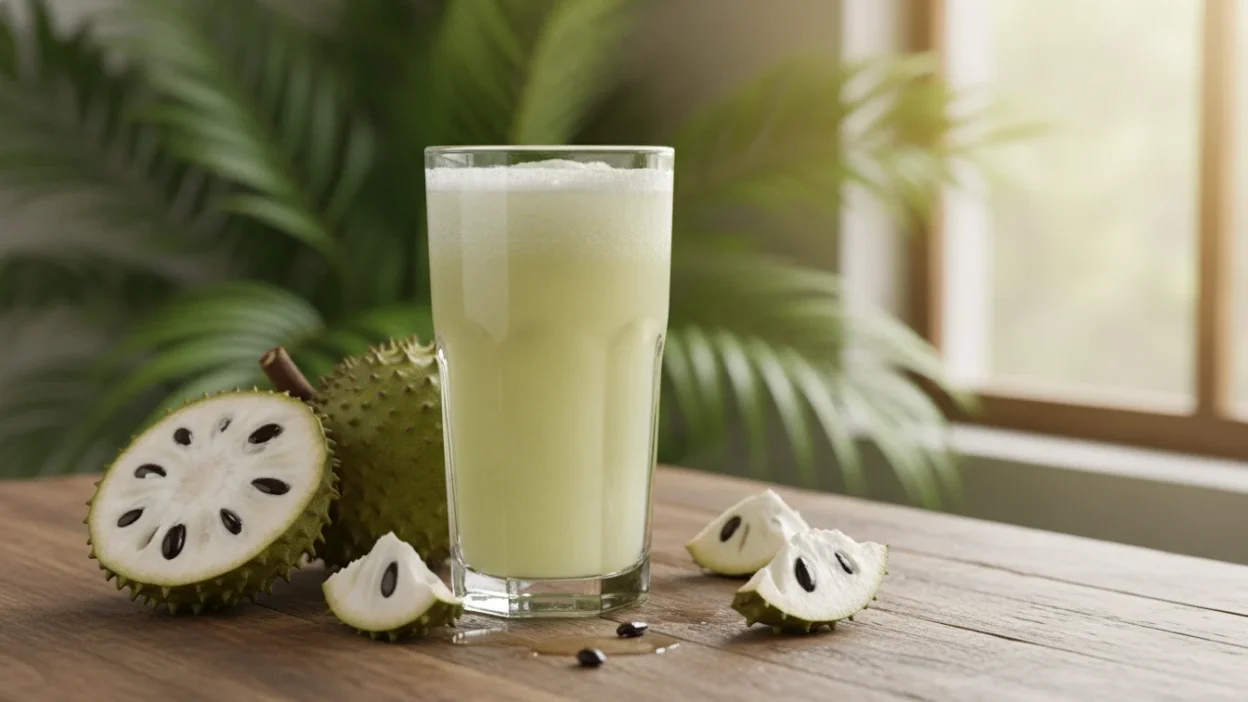
Welcome to the world of guanabana juice. It’s a drink that tastes great and is good for you. Imagine drinking something that’s both sweet and tangy, like nature’s candy. This tropical drink is full of nutrients and antioxidants, making it great for your health.
Learning to make this drink is more than just about taste. It’s a natural way to clean your body and keep your energy up. Unlike coffee or sugary drinks, it won’t make you feel jittery. Every sip takes you to a sunny beach, refreshing your spirit and boosting your health.
In this guide, you’ll learn how to pick the best soursop and make the juice easily. Its popularity in the US shows its cultural value and health benefits. So, let’s start making your own guanabana juice and live a healthier life.
Fresh Guanabana Juice Recipe for Detox and Energy
Equipment
- Blender, fine mesh sieve, knife, cutting board, large bowl, serving glasses
Ingredients
- 2 cups fresh guanabana soursop pulp
- 3 cups filtered water
- 2 tablespoons honey or agave syrup optional
- Ice cubes for serving
Instructions
- Select ripe guanabana fruit and clean it well.
- Remove seeds carefully from the pulp.
- Add pulp and water into a blender.
- Blend until smooth.
- Strain using a fine mesh sieve (optional).
- Add honey or sweetener if desired.
- Chill in the fridge for 1 hour.
- Serve cold over ice.
Notes
- Always remove all seeds before blending
- Use ripe fruit for best sweetness
- Best served cold and fresh
🌿 Health Benefits (short for card)
- Supports detoxification
- Boosts natural energy
- Rich in vitamin C and antioxidants
- Supports digestion and immunity
- Servings: 2 glasses
- Calories: 120 kcal per serving
- Difficulty: Easy
1. What Is Guanabana Juice and Why Is It Popular?
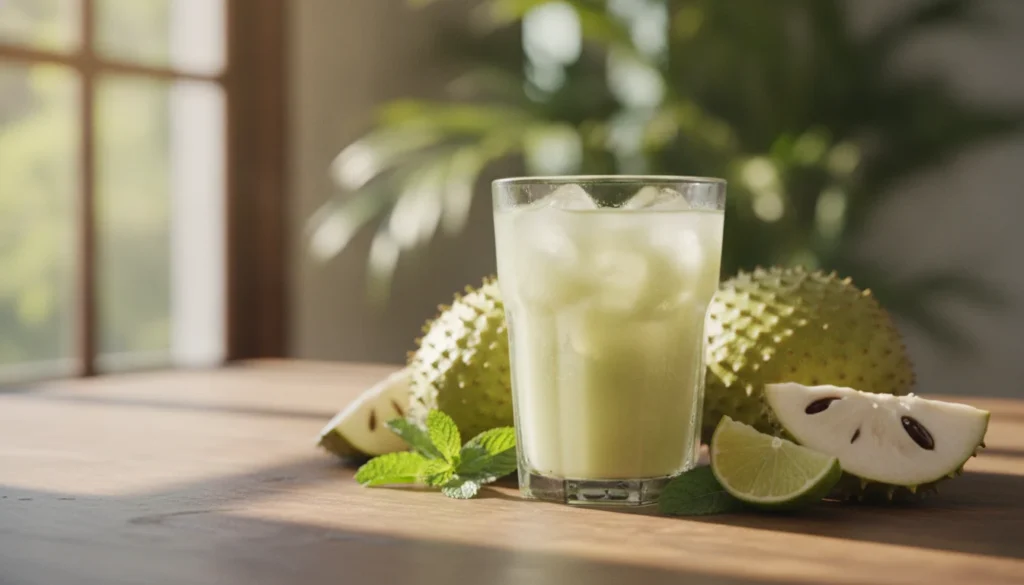
Guanabana juice is a refreshing drink with a rich history. It’s loved for its delightful flavor and health benefits. The juice comes from the guanabana fruit, also known as soursop. It’s cherished in many cultures for its taste and health benefits.
Origins of Guanabana (Soursop)
The guanabana, or soursop, comes from tropical South America, Central America, Southeast Africa, and the Caribbean. It belongs to the Annonaceae family. For generations, it’s been used in food and traditional wellness.
Geographic origin and traditional uses
- Guanabana grows in warm climates, like rainforests.
- It’s used in remedies for digestive issues and fever.
- In many places, people eat it fresh or make drinks and desserts.
Cultural significance in Latin American and Caribbean cuisine
In Latin America and the Caribbean, guanabana is special in local cuisine. It’s used in:
- Refreshing drinks like juice and smoothies.
- Desserts like ice creams and sorbets.
- Traditional dishes that show off its unique flavor.
Understanding Guanabana vs. Soursop
Guanabana and soursop are the same fruit, but different names are used in different places. This can cause confusion, but it shows the fruit’s many uses.
Same fruit, different names
- In the United States, it’s called soursop.
- In Latin America, it’s known as guanabana.
- Both names highlight its rich flavor and versatility.
Common products: guanabana juice, soursop juice, guanabana drink
The fruit is enjoyed in many ways:
- Guanabana juice: A sweet and tangy drink from the fruit’s flesh.
- Soursop juice: Similar to guanabana juice, known for its refreshing taste.
- Guanabana drink: Often mixed with other fruits or ingredients for a unique flavor.
The guanabana juice taste is a mix of sweetness, like banana and coconut. It also has hints of mango, cherry, strawberry, and papaya. This complex flavor, along with its health benefits, makes guanabana juice a popular choice.
2. Health Benefits of Guanabana Juice
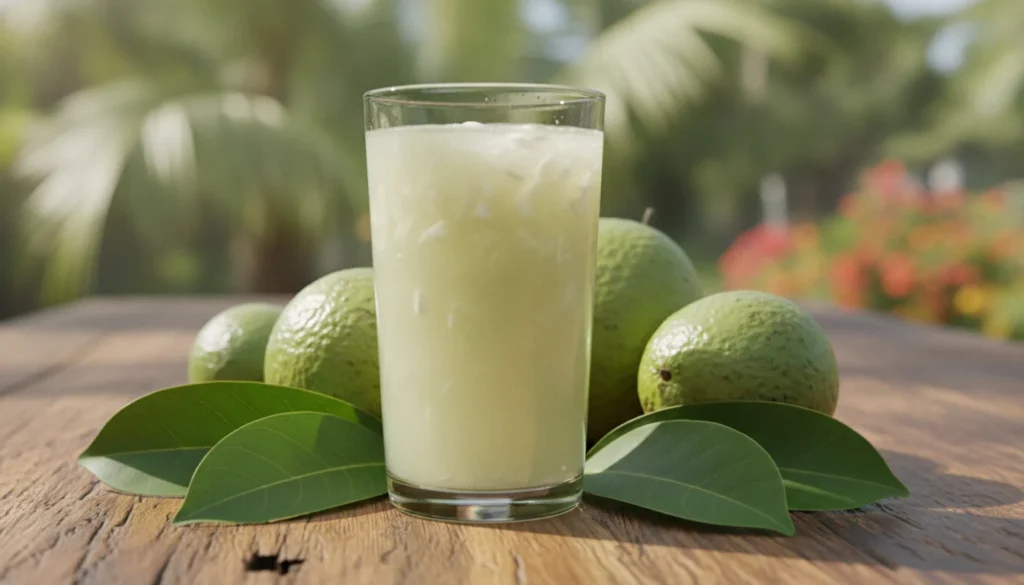
Discover how guanabana juice can boost your health. This tropical drink is full of nutrients. It offers many health benefits that can improve your well-being.
Detoxification Properties
Guanabana juice is known for its detoxification properties. It’s rich in antioxidants. These antioxidants protect your cells from damage.
Antioxidant content and cellular protection
- High levels of vitamin C and other antioxidants help neutralize free radicals.
- Protects against cellular damage, promoting healthier cells.
Natural cleansing support for the body
Drinking guanabana juice regularly helps your body clean itself. It helps remove toxins. This makes it a great choice for detox routines.
Energy Boosting Effects
Guanabana juice is not only refreshing but also gives a natural energy boost. It’s a better choice than sugary energy drinks.
Natural sugars and nutrient composition
- Contains natural sugars that provide sustained energy without the crash.
- Rich in vitamins and minerals that support energy metabolism.
Comparison to coffee and energy drinks
Unlike coffee, guanabana juice gives a steady energy boost without jitters. It’s a better source of energy, perfect for those who want to cut down on caffeine.
Additional Health Benefits
Guanabana juice offers more than just detox and energy. It has many other health benefits.
Immune system support
- Rich in vitamin C, which strengthens your immune response.
- Antioxidants help combat infections and diseases.
Digestive health advantages
The fiber in guanabana juice helps with digestion. It promotes regular bowel movements and can ease digestive issues.
Anti-inflammatory properties
- Helps reduce inflammation, which can alleviate physical pain.
- May assist in easing respiratory issues by reducing inflammation in the airways.
3. Guanabana Juice Nutritional Facts
Learning about guanabana juice’s nutritional facts can boost your health. This part explains the key parts of this tasty drink, highlighting its great benefits.
Macronutrient Profile
Calories per serving
A serving of guanabana juice has about 150 calories. It’s a good choice for keeping energy up without too many calories.
Carbohydrates and natural sugars
Guanabana juice is full of carbs from natural sugars. A serving has about 38 grams of carbs, giving you a quick energy lift. The sugars in guanabana juice are better than those in many other drinks.
Vitamins and Minerals
Vitamin C content
This juice is packed with Vitamin C, giving you about 60% of your daily need in one serving. Vitamin C is key for a strong immune system and helps make collagen.
Potassium and fiber benefits
Guanabana juice also has lots of potassium, good for your heart and muscles. Plus, its fiber helps with digestion, making it a great choice for your diet.
Comparing Fresh vs. Store-Bought
Nutritional differences
Fresh guanabana juice and store-bought versions differ a lot. Fresh juice keeps more nutrients, while processed drinks might lose important vitamins.
Preservative considerations
Store-bought guanabana juice often has preservatives and extra sugars that cut down its health perks. Making your own juice lets you get all the nutrients without additives.
4. Guanabana Juice Ingredients and Equipment
To make a tasty guanabana juice, you need certain ingredients and tools. This section will guide you through what you need. You’ll learn how to make a smooth and flavorful drink.
Fresh Ingredients Needed
Here’s a checklist of the fresh ingredients you will need:
- Fresh guanabana pulp: About 2 cups of ripe guanabana pulp.
- Water: 4 cups of filtered water, adjusted for desired consistency.
- Natural sweeteners: Options include honey, agave syrup, or coconut sugar.
Fresh guanabana pulp quantity
It’s important to use ripe guanabana pulp for the best taste. You’ll need about 2 cups of pulp. This comes from 1 to 2 medium-sized soursop fruits.
Water ratio guidelines
For the right consistency, mix 2 cups of pulp with 4 cups of water. This makes a refreshing drink that’s not too thick or watery.
Natural sweetener options
Use natural sweeteners to enhance your guanabana juice. You can choose from:
- Honey
- Agave syrup
- Coconut condensed milk (for a non-dairy option)
Kitchen Equipment
Having the right kitchen tools makes the process easier. Here’s what you need:
- High-speed blender: Essential for pureeing the fibrous pulp.
- Straining tools: A fine-mesh sieve or cheesecloth will help achieve a smooth texture.
- Large bowl: To catch the juice as you strain it.
Blender specifications
Choose a high-speed blender that can handle fibrous ingredients. This ensures your guanabana juice is perfectly blended.
Straining tools and containers
A fine-mesh sieve or cheesecloth is recommended for straining the juice. This step is vital for removing any pulp and achieving that signature smoothness.
5. Guanabana Juice Recipe: Step-by-Step Instructions
Making guanabana juice is fun and lets you enjoy the fruit’s fresh, tropical taste. Follow these steps to make your own guanabana juice at home. Each step is key to getting the perfect taste and texture.
Preparation Phase
Selecting ripe guanabana fruit
- Choose a guanabana that’s slightly soft. This means it’s ripe and tastes best. Look for a fruit with bright green skin and no spots.
Cleaning and preparing the fruit
- Rinse the guanabana under cool water to get rid of dirt. Then, use a sharp knife to remove the stem and skin. Cut off any bruised parts.
Removing seeds safely
- Open the fruit and take out the core. Be careful with the seeds because they’re not safe to eat. Throw away the seeds and keep only the soft pulp.
Blending Instructions
Combining ingredients in blender
- Put the guanabana pulp in a blender with some water. You can adjust the water to get the right consistency.
Achieving the right consistency
- Start blending on low speed first. This helps get rid of any seeds. Then, increase the speed until it’s smooth.
Straining techniques
- If you want it smoother, strain it through a fine mesh sieve or cheesecloth. This removes any fibrous bits and makes it silky.
Final Steps and Serving
Adjusting sweetness to taste
- Taste your juice and add sweetener if you like. Honey or agave syrup are good choices to sweeten it.
Chilling recommendations
- Chill your juice in the fridge for at least an hour before drinking. This makes it even more refreshing.
Presentation suggestions
- Serve your juice over ice in a tall glass. Add a slice of fresh fruit or a mint sprig for a nice touch.
6. Recipe Card: Fresh Guanabana Juice
This section gives you a quick and easy recipe card. It has all the key details you need. This recipe is quick, taking just 10 minutes to make, and doesn’t need cooking. Let’s get into the details!
Quick Reference Information
- Prep Time: 10 minutes
- Cook Time: 0 minutes
- Total Time: 10 minutes
- Servings: 2 glasses
- Course: Beverage / Detox Drink
- Cuisine: Tropical / Latin American
- Calories: 120 per serving
Ingredients Checklist
- 2 cups fresh guanabana pulp
- 3 cups filtered water
- 2 tablespoons honey or agave syrup (optional)
- Ice cubes for serving
Instructions
- Step 1: Prepare the fresh guanabana fruit.
- Step 2: Extract the pulp from the fruit.
- Step 3: Remove all guanabana seeds carefully.
- Step 4: Add pulp and water to the blender.
- Step 5: Blend on high for 2 minutes.
- Step 6: Strain through a fine mesh sieve.
- Step 7: Add sweetener if desired.
- Step 8: Serve over ice or chilled.
7. Delicious Guanabana Juice Variations
Once you’ve learned the basic guanabana juice recipe, you can try many exciting variations. These new recipes not only taste great but also offer extra health perks. Here are some tasty options to try:
Tropical Guanabana Smoothie
This smoothie is a creamy treat that mixes guanabana with banana and mango. It’s a refreshing drink perfect for breakfast or a snack.
Adding banana and mango
Bananas make the smoothie smooth, while mango adds a sweet, tangy taste. Together, they make your smoothie delicious and healthy.
Protein boost options
Want more protein? Add a scoop of your favorite plant-based protein powder. It boosts the smoothie’s nutrition and keeps you full longer.
Guanabana Citrus Blend
Love tangy flavors? Try this variation. Fresh lime juice brightens the taste and boosts vitamin C.
Combining with lime juice
Lime juice gives a zesty kick that goes well with guanabana’s sweetness. It’s refreshing and great for hot days.
Enhanced vitamin C benefits
Lime adds flavor and health benefits. Vitamin C is key for immune support and skin health, making this blend excellent.
Soursop Bitters Style Drink
This drink uses herbal bitters for a complex flavor, inspired by Caribbean wellness. It’s a tasty, non-alcoholic choice for any time.
Incorporating herbal bitters
Herbal bitters aid digestion. Adding them to guanabana juice makes a drink that’s good for your stomach and taste buds.
Traditional preparation methods
Traditional methods can make this drink even better. Many cultures use herbal bitters for their soursop bitters benefits.
These variations keep your guanabana juice exciting and healthy. Each recipe offers unique flavors and health benefits, so you’ll never get tired of this nutritious fruit.
8. Where to Find Guanabana Juice
Looking for guanabana juice is an exciting adventure. You can find it in local markets and stores. Whether you want fresh fruit or ready-made juice, there are many choices. Here’s a guide to help you find the best guanabana juice sources.
Finding Fresh Guanabana Fruit
Fresh guanabana fruit is found in many grocery stores and markets. Here are some places to check:
Latin American grocery stores
Asian supermarkets with tropical sections
Farmers markets and specialty grocers
Commercial Guanabana Juice Brands
If fresh guanabana isn’t available, try commercial brands. Some well-known brands include:
Rubicon Guanabana Juice availability
Other popular brands in the US
Online purchasing options
Where to Buy Graviola (Guanabana) Products
For supplements or other graviola products, consider these options:
Health food stores
Online retailers
International food markets
Now you know where to find guanabana juice. Whether you’re searching for “guanabana juice near me” or want to buy guanabana juice online, there are plenty of choices. Enjoy exploring this unique fruit!
9. Tips for Making the Best Guanabana Juice
Want to make the perfect guanabana juice? Follow these tips to improve your skills. You’ll enjoy a tasty, healthy drink every time.
Selecting Ripe Fruit
Choosing the right guanabana is key for great taste and texture. Here’s how to pick the best:
- Color and texture indicators: Look for guanabana that’s slightly soft and bright green. Stay away from fruits with brown spots, as they’re too ripe.
- Avoiding overripe or underripe fruit: Press the skin gently; it should give a bit but not be mushy. This means it’s perfectly ripe.
Storage and Freshness
Keeping your guanabana fresh is important. Here’s how to do it:
- How to store fresh guanabana: Store whole guanabana at room temperature until it’s ripe. Then, put it in the fridge to keep it fresh longer.
- Juice preservation tips: Store leftover juice in a sealed container in the fridge for up to three days. Or, freeze it for up to two months for longer enjoyment.
Common Mistakes to Avoid
Even pros can slip up. Here are common mistakes to steer clear of:
- Seed removal importance: Make sure to remove all black seeds before blending. They can make your juice taste bitter.
- Proper dilution ratios: Watch how much water you add. Too much makes the juice weak, too little too thick and pulpy.
10. Conclusion
Making fresh guanabana juice is more than a recipe. It’s a journey into health and flavor. You now know how to pick the best fruit and its health benefits. Plus, you can make a drink that boosts your energy and cleanses your body.
Try out different recipes to keep your guanabana experience fun. Every sip connects you to the tropical superfruit’s rich heritage. You get to enjoy its special taste and its health benefits.
Don’t be afraid to try new things. Mix in other fruits or herbs to make your drink unique. Your kitchen can become a place where health and flavor come together. This makes guanabana juice a regular part of your day.
Begin your guanabana journey today. Enjoy the freshness and energy of making this juice at home. You’ll not only get a tasty drink but also improve your health.
You may also enjoy these recipes:
- How to Make the Miami Vice Cocktail Drink Recipe Easily
- Powerfully Refreshing Miami Vice Cocktail Drink Recipe
FAQ
What is guanabana juice and what are its health benefits?
Guanabana juice comes from the guanabana fruit, also called soursop. It’s known for its unique taste and health perks. It’s packed with antioxidants, vitamins, and minerals. These help detoxify, boost energy, strengthen the immune system, and aid digestion.
How do I make guanabana juice at home?
To make guanabana juice, pick a ripe fruit. Remove the seeds and blend the pulp with water until it’s smooth. Strain it to get a silky texture. Add sugar if you like it sweeter. Chill it before drinking for a refreshing treat.
Where can I buy guanabana juice online?
You can find guanabana juice online at health food stores and specialty websites. Brands like Rubicon sell it, so you can get it delivered to your home.
What are the nutritional facts of guanabana juice?
Guanabana juice is low in calories but rich in carbs and natural sugars for energy. It’s also full of Vitamin C, potassium, and fiber. These nutrients make it a healthy choice.
Can I use guanabana juice in smoothies?
Yes! Guanabana juice is great in smoothies. Mix it with banana and mango for a creamy, flavorful drink. It’s both nutritious and delicious.
What are soursop bitters and their benefits?
Soursop bitters are a traditional mix of guanabana leaves and other herbs. They’re thought to aid digestion and overall health. They draw on the rich heritage of guanabana in Caribbean wellness.
How do I select a ripe guanabana fruit?
Choose a guanabana that’s slightly soft and has a bright green color. Avoid fruits with brown spots or a soft, mushy feel. These are likely overripe.
How long can I store homemade guanabana juice?
You can keep homemade guanabana juice in the fridge for up to three days. Freeze it for longer storage. This way, you can enjoy its refreshing taste later.
Are there any common mistakes to avoid when making guanabana juice?
Yes, don’t forget to remove all the seeds, as they’re not safe to eat. Also, avoid using the wrong water ratio. This can make the juice too thick or too thin. Make sure to remove all seeds and adjust the water for the right consistency.