Could a simple glass really help your wellness routine? A vibrant cup of plum juice can do more than quench thirst — it delivers vitamins, minerals, and natural antioxidants in a delicious, drinkable form.
This complete guide walks you through everything about plum juice: the science-backed benefits for digestion and heart health, how prunes and fresh plums differ, smart buying tips, and easy at-home methods to make your own juice and syrups. You’ll also find non-alcoholic recipe ideas (including a tropical Miami Vice mocktail) and a practical electrolyte drink recipe built around plum juice.
Whether you prefer store-bought bottles or DIY batches from ripe plums, this article shows simple ways to enjoy plum juice every day from a morning boost to refreshing mocktails and functional drinks.
1. What Is Plum Juice and Why Should You Drink It?
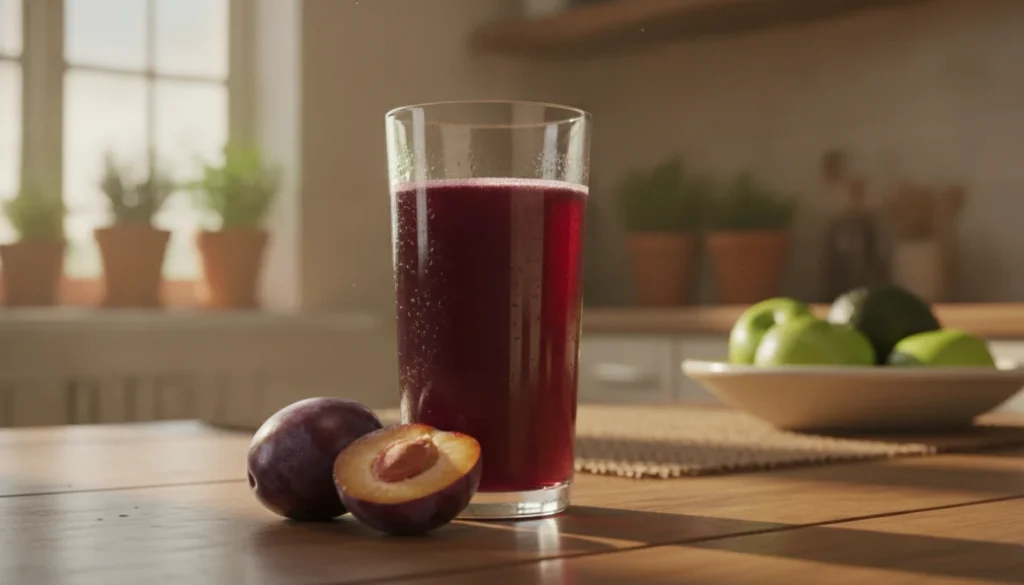
Plum juice whether pressed from fresh plums or made from rehydrated prunes is a flavorful fruit juice option that can fit into a healthy eating pattern. Fresh plum juice tends to be lighter and higher in vitamin C, while prune-derived juices are often richer in soluble fiber and concentrated sugars. Both deliver nutrients and can be a convenient way to enjoy the benefits of plums.
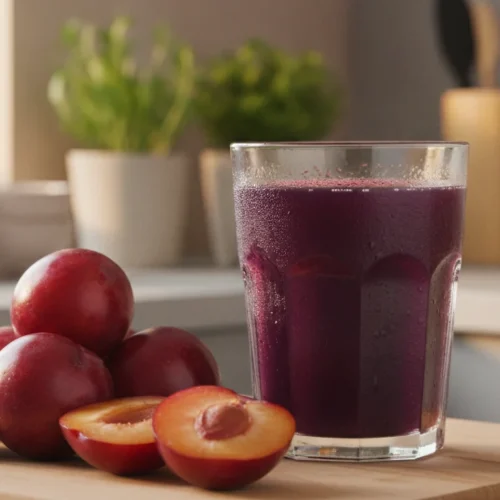
Fresh Plum Juice
Equipment
- Blender or juicer, knife, cutting board, fine-mesh strainer, measuring cup, glass jar.
Ingredients
- 4 ripe plums halved and pitted
- 1 cup water
- 1 teaspoon lemon juice optional
- 1 teaspoon honey or maple syrup optional
- Ice cubes for serving optional
Instructions
- Wash the plums thoroughly and remove the pits.
- Add the plums and water to a blender.
- Blend until smooth, about 30–60 seconds.
- Strain through a fine mesh sieve if a smoother texture is desired.
- Stir in lemon juice and sweetener if using.
- Adjust consistency with additional water if needed.
- Chill for 15 minutes or serve immediately over ice.
- Enjoy fresh.
Notes
- Leave some pulp for extra fiber and nutrients.
- Replace water with coconut water for added electrolytes.
- Adjust sweetness according to the ripeness of the plums.
- Best consumed within 24 hours.
- Calories: 120 kcal
- Carbohydrates: 30 g
- Protein: 1 g
- Fat: 0 g
- Fiber: 2 g
- Sugar: 24 g
- Potassium: 300 mg
- Vitamin C: 15 mg
The Nutritional Profile of Fresh Plum Juice
Fresh plum juice supplies several important micronutrients and compounds commonly associated with plum fruit. Typical nutritional highlights include:
- Vitamin C: Supports immune function and antioxidant defenses.
- Vitamin K: Contributes to bone health and normal blood clotting.
- Potassium: Helps regulate fluid balance and blood pressure.
- Fiber: Present mainly when pulp is retained; strained juice has much less fiber than whole fruit.
Note: exact amounts vary by plum variety, ripeness, and whether you strain the juice check product labels or USDA data for precise values if you need them.
Organic vs. Natural Plum Juice: Understanding the Differences
When shopping, you’ll see labels like “organic” and “natural.” Organic plum juice is produced from fruit grown without synthetic pesticides and is certified by an accredited body. “Natural” is a marketing term with looser definitions and may still include added ingredients, so make sure to read the ingredient list. Look for “100% juice” and no added sugars if you want a minimal, fruit-forward product.
Who Can Benefit from Drinking Plum Juice
Plum juice can be enjoyed by many people and may be especially useful for:
- Those with occasional digestive sluggishness (prune-based drinks can be helpful)
- People seeking a potassium-rich beverage to support heart health
- Anyone wanting an antioxidant-rich fruit drink as part of a balanced diet
Tip: if you’re using a juicer or blender at home, keep some pulp for extra fiber, or strain for a smoother glass — both are valid ways to enjoy plum juice depending on your texture preference.
2. Top Health Benefits of Plum Juice
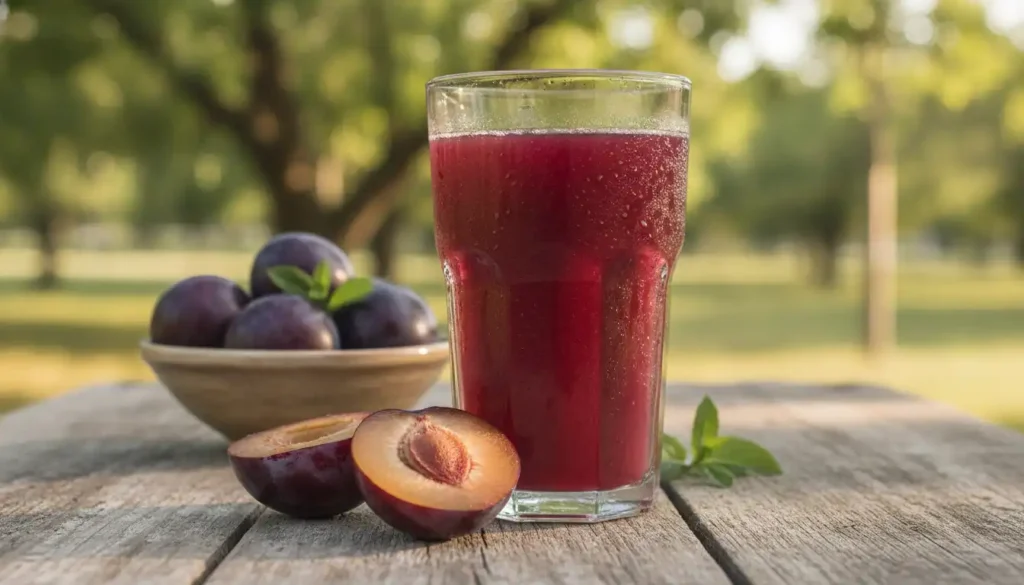
Beyond its rich color and flavor, plum juice offers several health-supporting compounds that make it a smart addition to a balanced diet. Below are the main benefits, described with practical context and a cautious, evidence-minded tone.
Plum Juice for Digestion and Gut Health
Plum juice especially when made from prunes or with some retained pulp contains sorbitol and soluble fiber that can help relieve occasional constipation. Research and clinical experience suggest prune-based beverages may be an effective, gentle option for some people; individual responses vary, and results are not guaranteed to outpace fiber supplements like psyllium for everyone.
The Role of Fiber in Plum Juice
Fiber in whole-plum preparations feeds beneficial gut bacteria and supports regularity. Keep in mind that strained juice contains much less fiber than blended or pulped versions, so if your goal is digestive fiber, leave some pulp in the drink.
Antioxidant Properties and Anti-Inflammatory Effects
Plums contain polyphenols and anthocyanins antioxidant compounds that can reduce oxidative stress in the body. While no single food prevents disease on its own, regularly consuming antioxidant-rich fruit juices like plum juice as part of a varied diet may contribute to lower inflammation and support long-term health.
Supporting Heart Health with Regular Plum Juice Consumption
Some studies link diets rich in potassium and plant compounds with improved blood pressure control and more favorable cholesterol profiles. Plum juice provides potassium and bioactive compounds that may support heart health when combined with an overall heart-healthy eating pattern, exercise, and medical care where needed.
Boosting Energy and Supporting Natural Vitality
Plum juice delivers natural sugars and B vitamins in a whole-food context, which can offer a gentle energy lift without the rapid crash associated with highly processed sugary drinks. A small serving (for many people, about 4–8 ounces) can be a quick, fruit-forward way to refresh between meals or before light activity.
For more details on frequency, interactions, and suitability for children or people with health conditions, see the FAQ section and consult a healthcare professional if you have specific concerns.
3. Prunes vs. Plums: Understanding the Connection
Knowing the difference between prunes and fresh plums helps you choose the right food or beverage for your goals. Both come from the same family of stone fruits but differ in texture, concentration of nutrients, and culinary uses.
What Makes Prunes Different from Fresh Plums
Prunes are simply dried European plums. Drying concentrates their natural sugars, fiber, and calories, which makes prunes sweeter and more calorie-dense than fresh plums. That concentration also increases sorbitol and soluble fiber levels, which is why prune-based juices and snacks are often recommended for digestive support. Fresh plums, in contrast, are juicy, lower in calories per piece, and a better source of vitamin C and hydrating water.
How Long Does It Take for Prune Juice to Work?
Prune juice is known for its mild laxative effect. Many people report relief within about 1 to 3 hours when taken on an empty stomach, though timing varies by individual, dose, and gut sensitivity. For chronic constipation, daily intake over several days may be more effective than a single serving. If you’re unsure, start with a small amount and see how your body responds.
When to Choose Prune Juice vs. Fresh Plum Juice
Your choice depends on the outcome you want:
- Choose prune juice when you need digestive support or a more concentrated source of soluble fiber and calories.
- Opt for fresh plum juice when you want a lighter, vitamin-packed, hydrating drink.
For a traditional home remedy option, see the “Prune Juice and Butter” section later in this guide — and consult a healthcare provider if you have ongoing digestive issues.
4. Where to Buy Plum Juice: Shopping Guide
Ready to buy plum juice? Whether you prefer a ready-to-drink bottle or a fresh refrigerated option, choosing quality plum juice makes a difference for flavor and nutrition. Below are practical places to look and simple label checks to help you pick the best product.
Finding Quality Plum Juice at Major Retailers
In regions where Queen Garnet products are distributed, the Queen Garnet plum juice is often recommended for its distinct plum variety and antioxidant profile. Large supermarkets and health food stores commonly carry plum juice — check the refrigerated juice section first for fresher, cold-pressed options.
Queen Garnet Plum Juice at Woolworths
If you shop at Woolworths, look in the chilled juice section or the refrigerated aisles near other cold-pressed fruit juices. Make sure the label reads “100% juice” and has no added sugars or unnecessary preservatives.
Queen Garnet Plum Juice at Coles
Coles typically stocks premium fruit juices in the fridge case as well; refrigerated storage helps preserve flavor and some heat-sensitive nutrients. If you can’t find it in-store, check online listings from the retailer or trusted grocery delivery services.
What to Look for on the Label
When selecting plum juice, use this quick checklist to compare products:
- Ingredient list: Prefer a single-ingredient “plum juice” or “100% plum juice” — avoid long ingredient lists.
- No added sugar: Make sure the product doesn’t add cane sugar, high-fructose syrup, or unnecessary sweeteners.
- Packaging & storage: Refrigerated bottles or cartons often preserve more fresh flavor; shelf-stable options can still be good but check the processing method.
- Organic options: If you want fruit grown without synthetic pesticides, choose certified organic plum juice.
Buying tip: if you plan to store homemade or bulk-bought juice, use a clean glass jar or sealed container and refrigerate promptly to preserve quality. These small checks will help you find a plum juice that fits your taste, budget, and nutrition goals.
5. How to Make Fresh Plum Juice at Home
Making fresh plum juice at home is simple and rewarding — you control the texture, sweetness, and whether to keep pulp for extra fiber. Below is a clear, user-friendly recipe card plus tips for juicing, equipment choices, storage, and scaling the ingredients.
Choosing the Right Plums for Juicing
Pick ripe but firm plums for the best flavor and yield. Red, black, and yellow varieties all work; Santa Rosa and similar varieties are popular for their sweet-tart balance. When plums are slightly soft to the touch they’ll blend easily but avoid overly mushy fruit.
Essential Equipment for Making Plum Juice
Choose equipment based on the texture you want:
- Blender: Best if you want to keep pulp and fiber (makes a thicker, smoothie-like juice).
- Juicer: Produces a clearer, smoother juice with less pulp and more volume.
- Fine-mesh strainer (if you blend but prefer a smoother drink)
- Cutting board, knife, measuring cup, and a clean glass jar for storage
Fresh Plum Juice
- Prep Time: 10 minutes
- Cook Time: 0 minutes
- Total Time: 10 minutes
- Servings: 2 (adjustable)
- Course: Beverage
- Cuisine: American
- Calories: Approximately 120 per serving (varies with plum size and strain choice)
Ingredients:
- 4 ripe plums (halved, pits removed)
- 1 cup water (more to thin as needed)
- 1 teaspoon lemon juice (optional, to brighten flavor)
- Honey or maple syrup to taste (optional)
Scaling option
To scale the recipe, multiply ingredient quantities by the number of servings (e.g., for 4 servings, use 8 plums and 2 cups water). Implement a simple multiplier in your CMS or multiply manually.
Instructions
- Wash plums thoroughly and pat dry. Halve and remove pits.
- If using a blender: place halved plums and water in the blender. Blend until smooth (about 30–60 seconds).
- If using a juicer: feed halved plums through the juicer, collecting juice in a jug.
- For a smoother drink: strain blended mixture through a fine-mesh sieve into a bowl, pressing with a spoon to extract juice; discard or reserve pulp for baking or smoothies.
- Stir in lemon juice and sweetener (if using). Taste and adjust dilution with water.
- Chill for 15–30 minutes or serve over ice. Pour into a glass jar and enjoy.
Notes
- Leaving pulp in the drink increases fiber and makes a heartier beverage — good if you want the benefits of whole fruit.
- Swap water for coconut water for added electrolytes after light exercise.
- Use honey or maple syrup sparingly if you want a lower-sugar option.
Storage Tips
- Store fresh plum juice in a sealed glass jar in the refrigerator for up to 48–72 hours; fresh flavor is best within 24 hours.
- For longer storage, freeze in ice-cube trays and thaw portions as needed.
Nutrition Facts (approximate)
Per serving (2-plum serving, strained): ~120 kcal, small amounts of fiber if strained (higher if pulp retained), potassium and vitamin C present — exact values vary by plum variety and serving size. For precise nutrition, consult USDA food data for the plums you use.
Want more on juicing techniques and keeping skin, pulp, or thick blends? See the juicing tips in the recipe section and the “How to Make Fresh Plum Juice” anchor for detailed guidance.
6. Tropical Plum Juice Cocktail Recipes (Non-Alcoholic)
Elevate your drink menu with vibrant, alcohol-free plum juice mocktails. These tropical recipes showcase plum juice as a flavorful base for refreshing smoothies and layered mocktails — perfect for parties, warm afternoons, or a healthy treat. Each recipe below follows a full recipe format so you can scale servings and check ingredients easily.
Creating a Refreshing Drink Recipes
Want to explore more refreshing drink recipes? If you’re a fan of tropical flavors, our guide on Creating a Refreshing Guanabana Juice Blend walks you through every step of preparing this creamy and naturally sweet beverage, from selecting ripe guanabana (soursop) to achieving the perfect texture and flavor balance.
For those looking for a vibrant frozen cocktail, don’t miss our Miami Vice Cocktail Drink recipe. This popular beach-inspired drink combines the fruity flavors of a Strawberry Daiquiri with the creamy richness of a Piña Colada, creating a visually stunning and deliciously refreshing cocktail.
Check out both recipes for detailed ingredient lists, preparation techniques, serving suggestions, and expert tips to help you create the perfect drink for any occasion.
7. DIY Electrolyte Drink Recipe with Plum Juice
Making a homemade electrolyte drink with plum juice is an easy, flavorful alternative to many commercial sports drinks that can be high in added sugars and artificial ingredients. Plum juice is a good base because it contributes potassium and natural sugars, and it brings antioxidant benefits all useful after exercise or on a hot day.
Why Plum Juice Makes an Excellent Base for Electrolyte Drinks
Plum juice works well in DIY electrolyte blends for several reasons:
- Rich in potassium: Plum juice can provide substantial potassium per cup compared with many single-fruit servings — check serving sizes when comparing to bananas or other sources.
- Natural sugars: These provide quick, gentle energy without relying on refined sweeteners.
- Antioxidants: Plum juice contains polyphenols that may help reduce oxidative stress following strenuous activity.
Notes & Safety
- Nutrition: exact sodium and potassium content depends on the plum juice and coconut water brands — for precise values, check nutrition labels or use a nutrition calculator.
- If you have kidney disease or follow a low-sodium or low-potassium diet, consult a healthcare provider before using electrolyte drinks regularly.
- Adjust sweetness with maple syrup or honey, or omit sweetener if your plum juice is already sweet.
Storage Tips
- Store leftover drink in a sealed glass jar in the refrigerator for up to 48 hours; stir or shake before pouring.
- For single-serve convenience, freeze portions in ice-cube trays and thaw as needed.
This electrolyte drink recipe makes a refreshingly balanced post-workout beverage that leverages plum juice’s natural minerals and antioxidants while keeping added sugar minimal. See the FAQ if you have medication concerns or need personalized guidance.
8. Traditional Jamaican June Plum Juice Recipe
Explore the refreshing tradition of June plum juice, a popular Caribbean beverage enjoyed for its bright, tart flavor. In Jamaican food culture the June plum (commonly called ambarella or golden apple in some regions) is used to make a cooling, slightly fibrous drink that’s perfect for hot summer days and family gatherings.
The Cultural Significance of June Plum in Jamaican Cuisine
June plum holds a fond place in Jamaican cuisine and street-food culture. Its tart, lightly fibrous flesh is often transformed into drinks, chutneys, and preserves. Vendors and home cooks alike prize the fruit for its distinctive flavor that pairs well with ginger, citrus, and a touch of sweetener.
9. How to Make Plum Syrup at Home
Homemade plum syrup concentrates fresh plum flavor into a versatile sweetener you can use year-round. It’s simple to make and stores well for pancakes, mocktails, glazes, and more.
Creative Uses for Plum Syrup in Beverages and Cooking
Plum syrup adds a rich, fruity note to many dishes and drinks. Try it:
- Drizzled over pancakes, waffles, or French toast instead of pancake syrup
- Mixed into sparkling water or a mocktail as a natural sweetener
- Brushed on roasted vegetables or used as a glaze for tofu or chicken alternatives
Proper Storage Methods for Plum Syrup
- Store in a clean glass jar or airtight container in the refrigerator for up to two weeks.
- For longer storage, freeze syrup in small portions (ice-cube trays work well) for up to 3 months.
- If you plan to can for shelf stability, follow safe home-canning guidelines — do not assume this recipe is shelf-stable without proper canning procedures.
Tip: Reserve any strained pulp and mix into oatmeal or smoothies to avoid waste and add fiber. Use plum syrup to brighten drinks or remix into a sparkling plum mocktail for a seasonal twist.
10. Prune Juice and Butter: A Traditional Digestive Remedy
The combination of prune juice and a small amount of butter is a long-standing folk remedy used by some people to ease occasional digestive sluggishness. Historically recommended in home nursing care, the idea is that prune juice brings natural laxative compounds while a little fat may help certain digestive processes.
Keep in mind this is a traditional remedy rather than a medically validated treatment; consider it an occasional, comforting option rather than a daily solution.
The History of Prune Juice and Butter Combination
This mixing of prune juice with butter dates back decades as a home practice and was often passed along in family and nursing traditions. It remains part of folk medicine in some communities.
Modern Interpretation of This Classic Remedy
Some people still use prune juice and butter today for short-term relief. If you try it, treat it as an occasional measure and watch how your body responds. For persistent constipation or chronic digestive issues, consult a healthcare provider for evidence-based options.
How to Prepare Prune Juice with Butter
Quick preparation steps are below — use only unsalted butter and warm (not boiling) the juice:
- Warm ½ cup of prune juice gently in a small saucepan until just warm.
- Stir in 1 teaspoon of unsalted butter until it melts and is evenly mixed.
- Drink this mixture before bedtime if desired; discard any leftovers (use immediately).
Recipe Details:
- Prep Time: 2 minutes
- Cook Time: 1 minute
- Total Time: 3 minutes
- Servings: 1
- Course: Remedy
- Cuisine: Folk
- Calories: ~100 (approximate)
Notes & Safety
- Occasional use only — not recommended as a daily regimen without medical advice.
- People with gallbladder issues, fat malabsorption, or dairy sensitivity should consult a clinician first.
- If you are taking medications or have chronic health conditions, check with your healthcare provider before trying home remedies that alter digestion.
12. Conclusion
Adding plum juice to your routine is a simple, flavorful way to boost hydration, potassium, and antioxidant intake. Throughout this guide you learned practical benefits for digestion and heart health, how to buy quality juice, and several easy at-home recipes from fresh juice and plum syrup to a miami vice cocktail drink and a DIY electrolyte drink recipe.
Start your day with a refreshing glass of plum juice, drizzle homemade plum syrup over pancakes or waffles, or explore the delicious mocktail and hydration drink ideas featured in our Recipes section. Ready to get started? Head over to the recipes and discover new ways to enjoy the rich flavor and benefits of plums. If you found this guide helpful, be sure to bookmark it and subscribe for future updates, including printable recipe cards, seasonal plum inspiration, and expert tips.
With a little planning — choosing ripe plums in season, storing juice properly, and using minimal added sweetener like honey or maple when needed — plum juice can be an easy, nutritious addition to your meals. Give it a try tomorrow morning and discover the many tasty ways to enjoy plums.
Frequently Asked Questions
Got questions about safety, benefits, and how to use plum juice? Below are concise, practical answers and links to related sections for more detail.
Can You Drink Plum Juice Every Day?
In general, drinking a small amount of 100% plum juice (about 4–8 ounces / 120–240 ml) daily is safe for most adults. Start with a smaller serving if you’re new to plum or prune products to gauge tolerance. If you have specific health conditions, consult your healthcare provider.
Is Plum Juice Safe for Children?
Plum juice can help with occasional constipation in children older than six months, but give smaller portions (about 2–4 ounces) and check with your pediatrician before introducing any new juice regularly.
Does Plum Juice Help with Weight Loss?
Plum juice can support healthy habits—its fiber (when pulp is kept) and natural sweetness may reduce cravings—but it also contains natural sugars and calories. Use it as part of a balanced diet rather than relying on it as a weight-loss solution.
Can Plum Juice Interact with Medications?
Plum juice may have a mild diuretic effect in some people and contains vitamin K and other minerals that could affect certain medications. If you take blood pressure drugs, potassium-altering medications, or blood thinners, discuss plum juice with your clinician to ensure consistent intake and safety.
What Are the Health Benefits of Plum Juice?
Plum juice offers antioxidants, potassium, and (when unstrained) some fiber—components associated with digestive support, antioxidant protection, and electrolyte balance. These benefits are greatest when plum juice is part of a varied, nutrient-rich diet.
How Long Does It Take for Prune Juice to Work?
Prune juice often produces a bowel movement within about 1–3 hours on an empty stomach for many people, but response times vary. For chronic constipation, daily use over several days may be more effective. Consult a healthcare professional for persistent issues.
What Is the Difference Between Prunes and Plums?
Prunes are dried European plums; drying concentrates sugars, fiber, and sorbitol, which increases their laxative potential compared with fresh plums. Fresh plums are juicier and typically higher in vitamin C per serving.
Where Can I Buy Quality Plum Juice?
Look for 100% plum juice and reputable brands in refrigerated juice cases at supermarkets and health-food stores. If you’re seeking specific products like Queen Garnet, check regional availability with local retailers or online grocers.
How Do I Make Fresh Plum Juice at Home?
Choose ripe but firm plums, blend or use a juicer, and strain if you prefer a smoother texture. Keep the pulp if you want extra fiber. See the “How to Make Fresh Plum Juice” recipe section for full instructions, scaling, and storage tips.
What Are Some Creative Uses for Plum Juice?
Use plum juice in tropical mocktails, as a base for an electrolyte drink recipe, in syrups for pancakes, or blended into smoothies. Try adding leftover pulp to oatmeal or baking for extra fiber and flavor.
If you have persistent health concerns, unusual symptoms after drinking plum juice, or questions about interactions with medications, contact your healthcare provider. For quick access to recipes, jump to the recipe section or the electrolyte and Miami Vice mocktail examples.