
Curious how a simple cup of herbal tea can be a gentle part of your wellness routine? Drink Raspberry Leaf Tea is a plant-based, caffeine-free option many beginners enjoy for flavor and supportive nutrients.
This article walks you through the benefits, a trusted homemade recipe, and safety tips so you can start drinking raspberry leaf tea with confidence. We balance traditional uses with the latest research so you know what to expect for your body and health journey.
Scroll down for an easy recipe, timing and pregnancy guidance, and creative ways to enjoy this soothing raspberry infusion. Ready to brew your first cup?
Drink Raspberry Leaf Tea
Equipment
- Glass teapot or mug with infuser, kettle, measuring teaspoon, timer, fine mesh strainer.
Ingredients
- 1 teaspoon dried organic raspberry leaves
- 8 ounces 240 ml hot water (about 200°F / 93°C)
- Honey optional
- Fresh lemon juice optional
- Fresh mint leaves optional garnish
- Fresh raspberry optional garnish
Instructions
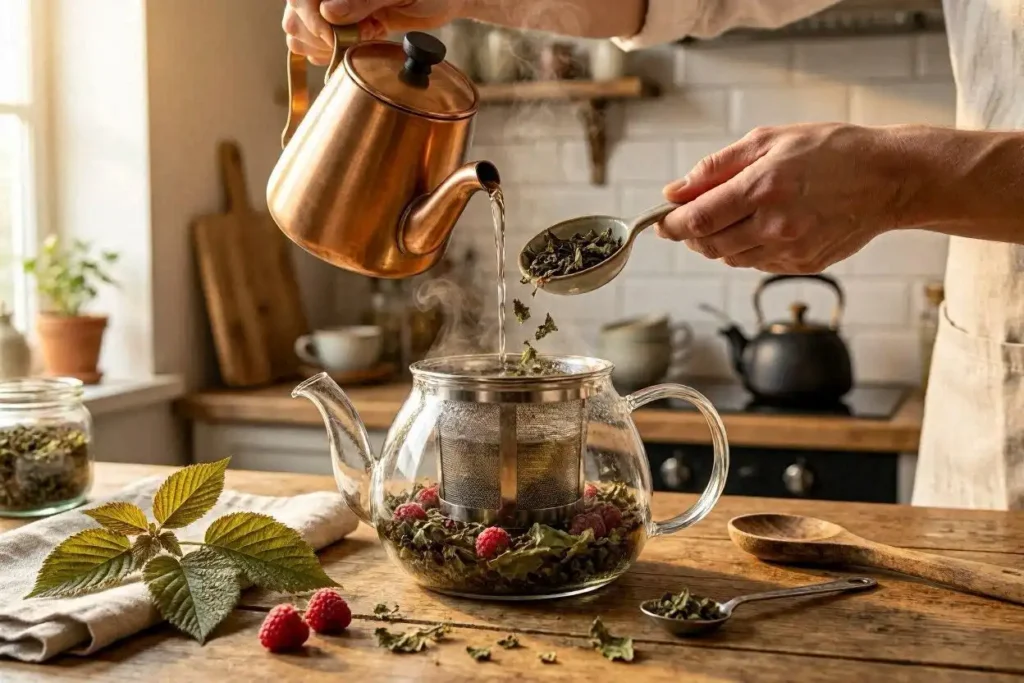
- Measure 1 teaspoon of dried raspberry leaves into an infuser or teapot.
- Heat water to approximately 200°F (93°C), just below boiling.
- Pour the hot water over the leaves.
- Steep for 5–6 minutes (3–4 minutes for a milder tea or 8–10 minutes for a stronger brew).
- Remove the leaves or strain the tea.
- Serve hot, or chill for a refreshing iced tea.
- Add honey, lemon, mint, or fresh raspberries if desired.
Notes
- Use organic raspberry leaves for the best flavor and quality.
- Store dried leaves in an airtight container away from heat and sunlight.
- For cold brew, steep the leaves in cold water for 8–12 hours in the refrigerator.
- Pregnant women should consult their healthcare provider before drinking raspberry leaf tea regularly.
Nutrition (Approximate per serving)
- Calories: 2 kcal
- Carbohydrates: 0.5 g
- Protein: 0 g
- Fat: 0 g
- Saturated Fat: 0 g
- Fiber: 0 g
- Sugar: 0 g
- Sodium: 2 mg
- Potassium: 15 mg
- Calcium: 10 mg
- Iron: 0.3 mg
- Magnesium: 4 mg
Recipe Tips
- Steep longer for a stronger herbal flavor.
- Sweeten naturally with raw honey or maple syrup.
- Add lemon to brighten the taste.
- Enjoy hot during winter or iced during summer.
Storage
- Store prepared tea in the refrigerator for 24–48 hours.
- Store dried raspberry leaves in an airtight jar for 12–18 months.
Serving Suggestions
Serve warm as a relaxing evening drink, alongside breakfast, or chilled over ice with lemon slices and fresh mint for a refreshing summer beverage.What Is Raspberry Leaf Tea and Why Should You Drink It?

Raspberry leaf tea is an herbal infusion made from the young leaves of the raspberry plant. Harvested in spring just before flowering, the fresh leaves produce a mild, earthy brew think a gentle, caffeine-free alternative to green tea.
Beyond flavor, raspberry leaf tea contains a range of nutrients and plant compounds often prized in traditional herbal use. It is commonly noted for minerals like calcium and iron and for tannins and other compounds that contribute to its astringent, soothing properties.
Unlike many fruity blends, this leaf tea has a subtle herbal profile that many people find easy to enjoy daily. For beginners, it’s an approachable way to add a caffeine-free infusion to your routine.
The Origins and Properties of Raspberry Leaf Tea
Raspberry leaf tea has a long history in traditional herbal medicine; it has been used for centuries in Europe and other regions for its supportive properties. Historically, practitioners described it as a uterine tonic and a general women’s health herb. Note: these are traditional uses see the safety section later for evidence-based guidance.
What makes organic red raspberry leaf tea special
Organic red raspberry leaf tea refers to leaves grown without synthetic pesticides or fertilizers. Choosing organic red raspberry leaf can reduce exposure to residues and may better preserve the natural flavor and nutrient profile of the leaves.
Understanding raspberry leaf medicinal uses throughout history
Through the centuries, raspberry leaves were brewed for digestive comfort, menstrual support, and as a gentle tonic. While many people still value these traditional uses, modern research is limited—so consider historical information as useful context rather than definitive proof of effectiveness.
Who Can Benefit from Drinking Raspberry Leaf Tea?
Raspberry leaf tea can be enjoyed by a wide range of people. It’s popular with women seeking hormone-supportive herbs, anyone wanting a caffeine-free herbal option, and those who appreciate a mild, nutrient-containing infusion.
Target audience and wellness goals
Good candidates for adding raspberry leaf to their routine include beginners to herbal teas, people limiting caffeine, and those looking for gentle digestive or menstrual support. If you are pregnant, planning pregnancy, or have hormone-sensitive conditions, see the pregnancy & safety guidance in this article and consult a trusted healthcare provider before drinking.
Drink Raspberry Leaf Tea Benefits for Your Overall Health
Raspberry leaf tea offers several reasons people add this leaf infusion to their routines: a gentle flavor, a nutrient-containing profile, and traditional uses that target digestion and women’s health. While research is still growing, many enjoy the tea as part of a balanced approach to wellness.
Key Health Advantages of Regular Consumption
Red raspberry leaf tea benefits for immune support
Red raspberry leaf tea contains antioxidant compounds (including various polyphenols) that can support overall antioxidant status. Some laboratory analyses and traditional accounts point to ellagic acid and vitamin C–containing fractions in raspberry plant material, which contribute to antioxidant activity. Note: human studies are limited—describe benefits as supportive rather than curative.
How drink raspberry leaf tea supports digestive wellness
The astringent tannins in raspberry leaf tea are traditionally used to soothe minor digestive discomforts such as mild bloating or upset stomach. Many people find a cup after meals helps digestion—try a warm cup after lunch to see how your body responds. If symptoms persist, consult your healthcare provider.
Nutritional Profile and Active Compounds
Vitamins and minerals in organic raspberry leaf tea
Organic raspberry leaf tea provides trace minerals and vitamins common to leafy herbs. Raspberry leaves can contain calcium, iron, magnesium, and B vitamins in small amounts; these contribute modestly to dietary intake when consumed regularly. Exact levels vary by harvest, growing conditions, and preparation method—so consider them complementary to, not a replacement for, a varied diet.
Quick snapshot (approximate, variable): calcium and iron (small amounts), magnesium (trace), B-complex micronutrients, and polyphenols/tannins. For clinical questions about nutrients or therapeutic use, review current studies and speak with a provider—see the studies and research section for sources.
Raspberry Leaf Tea Benefits for Female Health and Hormones

Raspberry leaf tea is widely used as a gentle herbal option for women interested in natural support for reproductive health and hormone balance. While many of its uses are traditional, the leaf infusion contains vitamins and minerals along with plant compounds that may support overall women’s wellness when used thoughtfully.
Supporting Women’s Wellness Through Natural Remedies
Raspberry leaf tea benefits female reproductive health
Traditionally, raspberry leaf tea has been described as a uterine tonic and used around times of menstrual discomfort or later in pregnancy. It provides small amounts of nutrients such as calcium and iron that contribute to general reproductive health. Because evidence is limited, frame these uses as supportive and historical rather than proven clinical treatments.
How raspberry leaf tea benefits hormones naturally
Raspberry leaves contain a variety of phytochemicals that herbalists have suggested may help promote hormonal balance and ease symptoms like mild PMS or menopausal discomfort. One compound often referenced in older herbals is “fragarine” (sometimes spelled differently in sources); its exact activity and clinical relevance remain under study. Importantly, raspberry leaf tea is not a substitute for prescribed hormone therapy—discuss any hormone-related treatment with your healthcare provider.
Raspberry Leaf Tea Fertility and Reproductive Support
Using raspberry leaf tea fertility benefits for conception
Some people include raspberry leaf tea as part of a preconception plan because it supplies modest amounts of vitamins C, E, and B-complex and trace minerals that support general nutrition. These nutrients may help create a healthy foundation for conception, but raspberry leaf should be one part of a broader, evidence-based fertility plan. If you’re trying to conceive, ask your provider which herbs and nutritional steps make sense for your individual situation.
Who should consult a provider: women who are pregnant or planning pregnancy, those with hormone-sensitive conditions, people on fertility medications, or anyone with chronic health concerns should check with their healthcare professional before using raspberry leaf tea therapeutically.
Raspberry Leaf Tea for Pregnancy: Essential Guidelines
Pregnancy is a time for careful choices, and raspberry leaf tea is one herb many expectant parents ask about. This section summarizes common midwifery guidance and practical precautions but it is not a substitute for personalized medical advice.
Understanding the Safety of Raspberry Leaf Tea Pregnancy Use
Talk with your healthcare provider (midwife or obstetrician) before adding raspberry leaf tea to your routine. While raspberry leaf tea has a long history of traditional use as a uterine tonic in later pregnancy, clinical evidence is limited. Most recommendations you’ll find come from herbalists and midwifery practice rather than large randomized trials, so discuss benefits and risks for your individual pregnancy.
When to start drinking raspberry leaf tea during pregnancy
Common midwifery practice suggests beginning leaf tea pregnancy use in the second trimester or later rather than during the first trimester. Starting with one cup per day (a mild infusion) and observing how you feel is typical; some practitioners increase to two or three cups a day as labor approaches. Confirm timing and dosing with your provider especially if you have a history of preterm labor or other pregnancy complications.
How to drink raspberry leaf tea pregnancy safely
For a standard home infusion: steep about one teaspoon of dried raspberry leaves per 8-oz cup of hot water for 5–10 minutes. This makes a gentle tea suitable for daily drinking. If you’re considering stronger preparations (longer steeps, concentrated infusions, or tinctures), get tailored guidance from a qualified herbalist or your healthcare team.
Recommended Intake and Timing
Proper dosage for expectant mothers
Typical guidance used in midwifery care ranges from one cup daily when beginning in the second trimester, up to two or three cups a day later in pregnancy. However, recommendations vary follow the advice of your healthcare provider who knows your medical history. Important questions to ask your provider include: “Is this safe for my pregnancy?” “When should I start or stop?” and “Could this interact with any medications I’m taking?”
When NOT to start: avoid raspberry leaf tea in the first trimester and if you have a history of preterm labor, unless your provider explicitly advises otherwise.
Drink Raspberry Leaf Tea Recipe: Your Complete Step-by-Step Guide
Making raspberry leaf tea at home is simple and rewarding. Below is a clear, beginner-friendly loose-leaf method plus a few variations so you can brew a cup that fits your taste and needs.
Gathering Your Ingredients and Equipment
Selecting quality organic raspberry leaf tea
Choose high-quality organic raspberry leaf tea when possible look for dried leaves that are green and free from fillers or artificial flavors. If you harvest your own raspberry leaves, pick young leaves in spring and dry them gently (low-heat dehydrator or very low oven) to preserve aroma and properties.
Tip: labeling the harvest date and batch on your jar helps track freshness.
Tools needed for perfect loose leaf tea preparation
Essentials: a glass teapot or mug with an infuser, a heat-safe kettle, and a timer. For travel or convenience, reusable tea bags or a fine mesh strainer work well.
Step 1: Measuring and Preparing Your Loose Leaf Tea
Proper portion sizes for optimal flavor
Measure about 1 teaspoon of dried raspberry leaf per 8-ounce cup as a starting point. That amount gives a mild, pleasant brew adjust up or down to taste.
Step 2: Heating Your Water to the Right Temperature
Temperature guidelines for best results
Heat water to just below boiling (~200°F / 93°C). Let it sit 30–60 seconds if it reaches a full boil, then pour over the leaves to avoid scorching delicate flavors.
Step 3: Steeping Your Raspberry Leaf Tea
Ideal steeping time and techniques
Steep for 5–6 minutes for a balanced cup. For a milder infusion, try 3–4 minutes; for a stronger brew, steep 8–10 minutes or increase the leaf amount slightly. Gently swirl the infusion once or twice to help the leaves release flavor.
Step 4: Straining and Serving Your Tea
Presentation tips and serving suggestions
Strain into a warmed cup and enjoy plain or sweetened with a little honey or lemon. Garnish with a fresh raspberry or a sprig of mint for a pretty touch.
Strength Variations (Quick Guide)
- Mild: 1 tsp / 8 oz, steep 3–4 minutes
- Standard: 1 tsp / 8 oz, steep 5–6 minutes
- Strong: 1.5–2 tsp / 8 oz, steep 8–10 minutes
Substitutions and Tips
- Tea bags: use one tea bag per 8 oz; steep the same times above.
- Cold infusion: steep leaves in cold water in the fridge overnight (8–12 hours) for a smooth cold brew.
- Blends: pair raspberry leaf with nettle, red clover, or mint for additional flavor and benefits.
Pregnancy & safety note
If you are pregnant or planning pregnancy, review the pregnancy guidance in this article and consult your healthcare provider before regular use or stronger preparations.
Save or print this recipe so you can replicate your preferred strength and share it with friends.
Creative Ways to Drink Raspberry Leaf Tea with Delicious Blends
Raspberry leaf tea is a versatile leaf tea that works well hot or cold and pairs nicely with other juices and herbs. Below are easy, tasty blends that make your raspberry leaf infusion more interesting — each recipe includes proportions, serving suggestions, and storage tips.
Incorporating Organic Beet Juice into Your Tea
Mixing organic beet juice with raspberry leaf tea creates a vibrant, nutrient-rich drink. Beet juice is high in dietary nitrates (which support healthy blood flow), and combined with raspberry leaf it makes a refreshing pre- or post-workout beverage.
Health benefits of combining organic beet juice with raspberry leaf
Beet + raspberry blends increase mineral and antioxidant content compared with the tea alone. This combination can be a nice part of menstrual-support routines or an afternoon refreshment.
Recipe for beet and raspberry leaf infusion
Recipe (serves 1): 1 cup strong chilled raspberry leaf tea + 1/4 cup organic beet juice. Stir gently, add ice if desired. Best served cold; keep refrigerated and consume within 24–48 hours.
Creating Refreshing Mexican Drinks with Raspberry Leaf Tea
Raspberry leaf tea makes a great base for Mexican-style aguas frescas. Brew a strong infusion, chill, and brighten with lime for a light, thirst-quenching beverage.
Traditional Mexican drink inspiration for your tea
Herbal infusions are commonly enjoyed chilled in Mexican cuisine. The tartness of lime pairs especially well with the mild astringency of the tea.
How to make a raspberry leaf tea Mexican-style beverage
Recipe (serves 4): 4 cups strong chilled raspberry leaf tea + 1/2 cup fresh lime juice + 2–3 tbsp honey or agave (to taste). Stir, serve over ice. Store in the fridge up to 48 hours. Tip: reduce sweetener for a lower-sugar option for kids.
Mixing with Concord Grape Juice for a Flavorful Twist
Concord grape juice adds a sweet, deep flavor that balances the tea’s astringency — a favorite for family gatherings and kid-friendly servings when sugar is moderated.
Combining concord grape juice and raspberry leaf tea
Recipe (serves 2): 2 cups cooled raspberry leaf tea + 1/2 cup concord grape juice. Mix, chill, and serve. This combo delivers antioxidants from both the tea and the grape juice. Best consumed within 24–48 hours; stir before serving if separation occurs.
Best served & allergen notes
Best served: beet blend (cold), Mexican-style (cold), grape mix (cold). Allergies: beet allergy is uncommon but possible; always check ingredients before serving to children or guests. For all blends, moderate added sugars and use whole-ingredient juices when possible.
Raspberry Leaf Tea Side Effects: What You Need to Know
Raspberry leaf tea is gentle for many people, but like any herb it can cause side effects or interact with health conditions and medications. Knowing what to watch for helps you use this leaf tea more safely.
Potential Risks and Who Should Avoid This Tea
Before you add raspberry leaf tea to your routine, be aware of these possible reactions:
- Nausea: A small number of people report mild nausea after drinking it.
- Loose stools or mild digestive upset: Tannins and other compounds can affect sensitive stomachs.
- Increased uterine (Braxton Hicks) activity: Some pregnant people notice more contractions after consuming the tea; describe this as a possible effect rather than a certainty.
Most symptoms are mild and resolve when you reduce intake or stop. If you experience persistent or severe symptoms, stop use and contact your healthcare provider.
Common side effects to watch for
- Mild nausea or queasiness
- Loose stools or changes in bowel habits
- Increased uterine sensations/contractions in pregnancy (monitor closely)
If you notice signs of an allergic reaction (hives, swelling, difficulty breathing) or severe abdominal pain, seek emergency care immediately.
Who should not drink raspberry leaf tea
Consider avoiding raspberry leaf tea (or consult your provider first) if you fall into any of these categories:
- People in the first trimester of pregnancy—most midwifery guidance advises delaying use until later.
- Anyone with hormone-sensitive conditions (e.g., certain breast cancers, endometriosis) without provider approval.
- Those allergic to raspberries or other members of the Rosaceae family.
Interactions with Medications and Health Conditions
Raspberry leaf contains tannins and other compounds that may affect nutrient absorption or interact with drugs. The tannins can bind dietary iron and may interfere with iron supplement absorption if taken at the same time.
Precautions for specific health situations
- If you take iron supplements, separate your tea and supplement by at least 1–2 hours and discuss timing with your clinician.
- If you have hormone-sensitive health issues, review raspberry leaf use with your healthcare provider before starting.
- If you are pregnant, especially with a history of preterm labor or pregnancy complications, consult your provider before use and monitor for increased contractions.
Questions to ask your provider: “Could raspberry leaf tea interact with my medications?” “Is this safe given my menstrual history or pregnancy status?” and “When should I stop drinking it?”
Risk summary (quick guide)
- Mild (watch): nausea, minor digestive upset.
- Monitor: increased uterine activity in pregnancy — report changes to your provider.
- Avoid / consult: first-trimester use, hormone-sensitive conditions, known allergies to raspberries.
Best Raspberry Leaf Tea Brands and Where to Buy
Choosing a high-quality raspberry leaf tea makes a noticeable difference in flavor and potential benefits. Below are practical tips for spotting good products and places to shop so you can select a reliable loose leaf or bagged option.
Top-Quality Organic Raspberry Leaf Tea Options
What to look for in the best raspberry leaf tea brands
When comparing brands, prioritize:
- Organic sourcing: look for certified organic raspberry leaf to reduce pesticide exposure.
- Single-ingredient leaves: pure raspberry leaf (no fillers or artificial flavors) preserves the tea’s natural properties and taste.
- Transparent labeling: harvest date, country of origin, and processing methods are signs of a trustworthy brand.
- Good packaging: opaque, airtight containers or foil-sealed bags help keep leaves fresh.
Certified organic options for health-conscious consumers
Certified organic raspberry leaf tea is preferred by many health-conscious buyers. USDA Organic or equivalent certifications mean the tea was produced under regulated organic standards. Brands that emphasize sustainable farming and fair sourcing are also worth considering if environmental impact matters to you.
Where to Purchase Raspberry Leaf Tea
Online retailers and local stores
You can buy raspberry leaf tea both online and in physical stores. Reliable online options include specialty tea shops, reputable herb suppliers, and major marketplaces where you can read verified customer reviews. Locally, check natural food stores, co-ops, and specialty tea shops for fresh options.
Tips for finding where to buy raspberry leaf tea
Try these practical steps:
- Check the bulk-herb section at health food stores for loose dried raspberry leaves you can inspect.
- Visit farmers’ markets or local herbalists to source small-batch or freshly harvested raspberry leaves.
- Compare price per ounce and pack sizes — typical retail prices vary by brand and certification but expect organic loose leaf to be moderate in price compared with common herbal teas.
If you want, I can compile a short recommended brands list (with reasons) and suggested retailers based on current availability and certification — tell me whether you prefer loose leaf or tea bags and I’ll include price ranges.
Tips for Maximizing Your Raspberry Leaf Tea Experience
Small habits make a big difference in flavor and benefit. Use these practical tips to store your tea, boost taste naturally, and build a simple routine so raspberry leaf becomes an easy part of your day.
Storage and Freshness Guidelines
How to keep your tea fresh longer
- Store dried leaves whole in an airtight glass jar or foil-sealed pouch, away from light, heat, and moisture.
- Keep ground or powdered leaf in smaller containers and use it sooner—ground forms lose aroma and potency faster than whole leaves.
- Label jars with harvest or purchase date; whole dried leaves stored properly can stay good for 12–18 months, while ground leaves are best within 6 months.
Enhancing Flavor Naturally
Sweetener options and flavor additions
- For a simple boost: add a teaspoon of raw honey or a squeeze of fresh lemon to a warm cup.
- Herb pairings: fresh mint, a cinnamon stick, or a pinch of ginger complement the tea’s mild astringency.
- Blend ideas: try nettle or red clover for an earthier wellness blend, or a small splash of concord grape or beet juice for a fruity twist.
Establishing a Consistent Tea-Drinking Routine
Best times to drink raspberry leaf tea
- Morning: a gentle, caffeine-free start—good for those avoiding coffee.
- After meals: a warm cup can support digestion; try a small cup after lunch.
- Evening: a calming option before bed (use milder strength if you’re sensitive to astringency).
Try a simple 7-day routine: pick one time (morning or after lunch) to drink a cup daily for a week and note how your body responds. If you’re pregnant or have health concerns, follow the pregnancy and safety guidance in this article and check with your provider before establishing regular use.
Conclusion
Raspberry leaf tea can be a pleasant, caffeine-free addition to a balanced wellness routine. Throughout this article you’ve seen its traditional uses, simple recipes, safety considerations, and creative ways to enjoy the infusion.
Try this next: brew the recipe in the recipe section, test one of the blends (beet, Mexican-style, or grape), and note how your body responds over a week. If you’re pregnant, planning pregnancy, or have a hormone-sensitive condition, discuss regular use with your healthcare provider before making it part of your routine.
Growing, harvesting, and drying your own leaves is a rewarding way to connect with the plant and control quality, but store-bought organic options work well too. Above all, listen to your body and seek medical advice when you need personalized guidance.
FAQ
What is raspberry leaf tea?
Raspberry leaf tea is a herbal infusion made from the dried young leaves of the raspberry plant. It has a mild, earthy flavor and is traditionally used for its nutrient-containing properties and gentle astringency.
What are the benefits of drinking raspberry leaf tea?
People drink raspberry leaf tea for its traditional benefits—supporting digestion, providing small amounts of minerals (like calcium and iron), and offering antioxidant plant compounds. Some women use it as part of a broader approach to reproductive health. Note: many uses are based on historical practice and limited studies; consult a provider for therapeutic use.
How do I make raspberry leaf tea?
Measure about one teaspoon of dried raspberry leaves per 8-ounce cup. Heat water to just below boiling (~200°F / 93°C), pour over the leaves, and steep 5–6 minutes. Strain and enjoy hot, or chill for a cold infusion. Adjust steeping time and leaf amount for mild or stronger brews.
Is raspberry leaf tea safe during pregnancy?
Many midwives recommend beginning raspberry leaf tea in the second trimester rather than the first, but clinical evidence is limited. Always discuss timing and dose with your healthcare provider (midwife or obstetrician) before use, especially if you have a history of preterm labor or pregnancy complications.
What are the side effects of raspberry leaf tea?
Some people report mild nausea, loose stools, or increased uterine sensations (Braxton Hicks) in pregnancy. Most effects are mild and resolve if you stop drinking the tea; seek medical advice for persistent or severe symptoms. If you experience allergic reactions (hives, swelling, or breathing difficulty), get emergency care.
Where can I buy raspberry leaf tea?
You can buy raspberry leaf tea at health food stores, specialty tea shops, and reputable online herb suppliers. Choose certified organic or single-ingredient products when possible and check packaging for harvest date and origin for best quality.
What are the best brands of raspberry leaf tea?
Several well-known herb and tea brands offer organic raspberry leaf products; availability varies by region. Look for sustainably sourced, certified-organic options from reputable suppliers. If you’d like, we can provide an updated short list of recommended brands and where to buy them.
Can raspberry leaf tea help with fertility?
Raspberry leaf provides modest amounts of vitamins and minerals that support general nutrition, which can be part of a healthy preconception plan. However, evidence that it directly improves fertility is limited. Discuss fertility strategies and any herbal interventions with your healthcare provider.
How should I store raspberry leaf tea?
Store raspberry leaf tea in an airtight glass jar or sealed pouch away from light, heat, and moisture. Whole dried leaves retain aroma and potency longer than ground forms—label with the purchase or harvest date and use ground leaf within a few months for best flavor.
Can I drink raspberry leaf tea cold?
Yes. For a cold infusion, steep leaves in cold water in the refrigerator for 8–12 hours (or overnight). This produces a smooth, refreshing cold brew. Keep cold-infused tea refrigerated and consume within 24–48 hours.