Make a show-stopping watermelon cake that’s as refreshing as it is beautiful perfect for summer gatherings and backyard parties. This fruit-forward cake blends juicy watermelon with classic cake textures for a lighter, colorful dessert.
This recipe is designed to be inclusive: use halal-certified vanilla, cream cheese, and flavorings to keep the cake halal-friendly (no alcohol or pork ingredients). It’s a great centerpiece for birthdays, potlucks, or casual get-togethers.
In this guide you’ll find a full recipe card, a printable ingredient checklist, step-by-step instructions, and storage tips. Makes about 8–10 servings; because the cake uses fresh fruit and cream, plan to refrigerate it when not serving.
1. Why Watermelon Cake Is the Ideal Summer Dessert
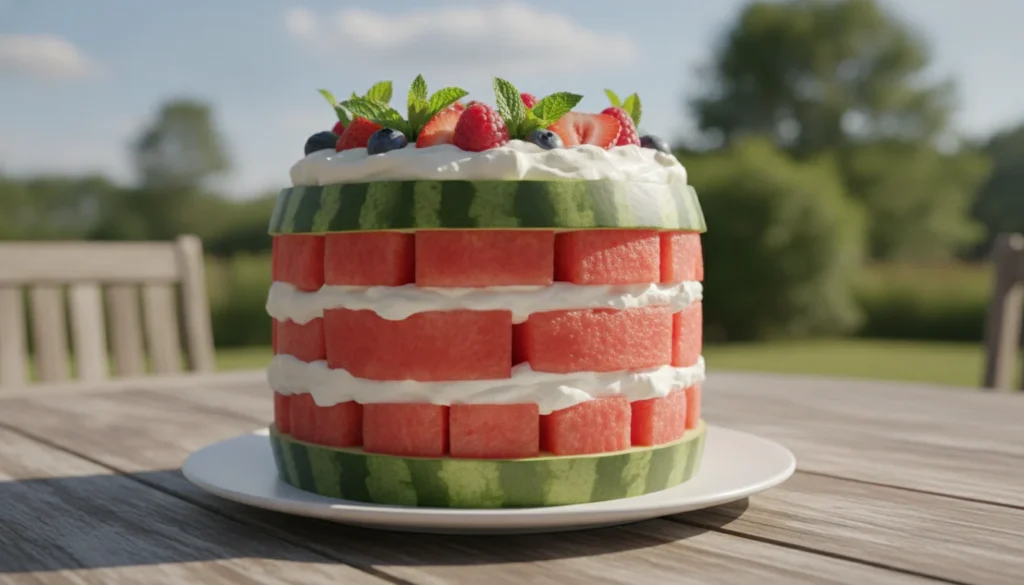
The watermelon cake is a top summer pick because it combines refreshing, hydrating fruit with the familiar comfort of cake a dessert that looks as good as it tastes and instantly livens up a party table.
1.1 The Appeal of Refreshing Summer Cakes
Cooling effect of watermelon in desserts
Watermelon is about 92% water, so using it in a cake adds natural hydration and a light, juicy texture that’s especially welcome on hot days. While it won’t replace fluids, the fruit’s high water content helps the cake feel refreshingly light.
Visual appeal and vibrant colors
The bright pink and green contrast of a watermelon cake makes it a striking centerpiece. Use seedless watermelon or remove seeds before pureeing to keep slices and layers visually clean.
1.2 Benefits of Making a Fruit-Based Cake
Natural sweetness and reduced sugar needs
Because ripe watermelon contributes natural sweetness, you can often lower added sugar compared with a typical cake. That makes this fruit cake an attractive option for people who prefer lighter desserts.
Healthier alternative to traditional cakes
Compared with heavy, frosting-heavy cakes, a watermelon-forward cake can be lower in added sugar and fat, depending on your frosting choice. Phrase this as a lighter alternative rather than a health guarantee.
Halal-friendly and inclusive for all guests
Make sure to use halal-certified vanilla, cream cheese, and food colorings if you need the cake to be halal-friendly. Avoid alcohol-based extracts or ingredients with animal-derived rennet so the dessert is suitable for all guests at your party.
2. Essential Ingredients for Your Watermelon Cake
To make a reliable watermelon cake, collect the right ingredients before you start. Below are the core items and suggested amounts to guide a standard 8–9 inch two-layer cake (adjust as needed).
Core Cake Ingredients
All-purpose flour, baking powder, and salt
All-purpose flour provides the cake’s structure; use about 2 cups. Combine with 2 teaspoons baking powder and 1/2 teaspoon salt for an even rise.
Eggs, sugar, and vanilla extract
Use 3 large eggs for binding and moisture. Add 1 to 1 1/4 cups granulated sugar, and 1 teaspoon halal-certified vanilla extract for classic cake flavor.
Vegetable oil or melted butter
Choose 1/2 cup vegetable oil for a lighter crumb or 1/2 cup melted butter for a richer cake. Both add necessary moisture for a tender layer.
Fresh Watermelon and Flavor Additions
Fresh watermelon puree or diced pieces
The main fresh ingredient is watermelon — aim for about 2 cups of strained watermelon puree for the batter and an extra 1–2 cups of diced watermelon for layering or garnish. Use seedless melon or remove seeds before pureeing to keep the texture smooth.
Strawberry or raspberry for color variation
Add 1/2 to 1 cup chopped strawberries or raspberries if you want more color and a complementary flavor, they also let you reduce artificial coloring if desired.
Halal-certified food coloring (optional)
If you prefer brighter pinks, use a few drops of halal-certified food coloring. Start small a little goes a long way.
Substitutions for Halal Compliance
Replacing rum or alcohol-based extracts
If a traditional fruit cake calls for rum or other alcohol extracts, substitute equal parts white grape juice or apple juice concentrate for a similar sweetness without alcohol.
Using halal-certified vanilla and flavorings
Make sure to choose halal-certified vanilla and other flavorings (check labels). For whipped cream or cream cheese frosting, select halal-certified brands to keep the cake suitable for all guests.
3. Tools and Equipment Needed
Before you bake your watermelon birthday cake, gather the right tools so the process is smooth and efficient. Below are the basic baking and decorating items, plus practical alternatives if you don’t have specialty tools.
3.1 Basic Baking Tools
First, the essentials for mixing and baking:
- Mixing bowls, measuring cups, and spoons: A set of nested mixing bowls and accurate measuring cups/spoons keeps ingredients consistent.
- Electric mixer or hand whisk: An electric mixer speeds beating eggs and sugar; a sturdy hand whisk works if that’s what you have.
- Round or rectangular cake pans (8–9 inch recommended): Use two 8-inch or two 9-inch round pans for even layers; an 8×8 or 9×13 rectangular pan works if you prefer a single-sheet or carved shape. Choose metal pans (non-stick or aluminum) for even heat distribution.
3.2 Decoration Essentials
For finishing and presentation:
- Piping bags and tips: For swirls and borders or use a zip-top bag with the corner snipped as a budget-friendly substitute.
- Offset spatula for frosting: Helps spread frosting smoothly across the top and sides for a clean finish.
- Turntable (optional): Makes smoothing and piping easier but is optional; you can rotate the cake on a plate if needed.
- Fresh fruit for garnish (seedless watermelon recommended): Extra seedless melon, strawberries, and mint brighten the top and sides; remove seeds from seeded melon before using.
With these tools on hand, you’ll be set to bake and decorate a gorgeous watermelon cake. If you’re missing anything, the notes above show simple, effective alternatives so you don’t need specialized equipment to get great results.
4. Preparing the Watermelon Puree
Getting the watermelon puree right is essential to a moist, flavorful cake. This section explains how to choose ripe fruit, make a smooth puree (about 2 cups for the batter), and prepare diced watermelon for layers or garnish without making the cake soggy.
4.1 Selecting the Right Watermelon
Pick a ripe, sweet watermelon for the best flavor and color.
- Choosing ripe and sweet watermelon: Choose a melon that feels heavy for its size and has a uniform shape that usually means ripe flesh and good sugar content.
- Testing for freshness indicators: Look for a creamy yellow field spot and a hollow sound when tapped; if those are present, the melon is likely ripe and ready.
4.2 Making Smooth Puree
Use this method to ensure a silky puree suitable for batter or frosting flavoring.
- Blending and straining techniques: Cut the watermelon into chunks, remove any seeds (or use a seedless melon), and blend until smooth. For a finer texture, pour the blended puree through a fine-mesh sieve to remove pulp.
- Measuring puree for the recipe: Measure out about 2 cups of strained watermelon puree for the cake batter. If the puree seems very watery, you can simmer it briefly to concentrate flavor cool completely before adding to batter or frosting.
4.3 Preparing Diced Watermelon
Diced watermelon is great between layers or as a fresh fruit topping, but take steps to control moisture.
- Cutting uniform pieces for layering: Cut small, even cubes (about 1/4–1/2 inch) for consistent texture in each slice.
- Draining excess moisture: Lay diced pieces on paper towels or a cooling rack and gently pat dry; let them sit a few minutes to drain so they don’t make the cake soggy.
| Step | Description | Description |
| Selecting Watermelon | Choose ripe and sweet melons. | Look for a creamy yellow spot and a hollow sound when tapped. |
| Making Puree | Blend and strain for smoothness. | Measure 2 cups for the recipe; simmer to concentrate if too watery. |
| Preparing Diced Watermelon | Cut into uniform pieces. | Drain excess moisture on paper towels before using. |
Food-safety note: Cakes with fresh fruit and cream should not sit at room temperature for more than 2 hours. Keep the finished cake refrigerated and add delicate fresh fruit toppings shortly before serving for best texture and safety.
5. Mixing the Cake Batter
Good mixing is the difference between a dense cake and a light, tender watermelon cake. Work in three steps: combine dry ingredients, whip the wet ingredients until airy, then fold in the watermelon puree last. Follow the visual cues below for best results.
5.1 Combining Dry Ingredients
Sifting flour, baking powder, and salt
Sift the dry ingredients together to remove lumps and distribute the leavening evenly. For a standard two-layer 8–9 inch cake, use the amounts listed in the ingredient section and sift into a large bowl.
Whisking for even distribution
After sifting, whisk the dry mix for 20–30 seconds to ensure a uniform blend — this helps the cake rise consistently and prevents pockets of baking powder.
5.2 Blending Wet Ingredients
Beating eggs and sugar until pale and ribboning
In a separate bowl, beat the eggs and sugar with an electric mixer for about 3–4 minutes until the mixture is pale, thick, and when you lift the whisk, the batter falls in a slow ribbon. This aeration is essential for a light crumb.
Adding oil and vanilla
Stream in the oil (or melted butter) and add halal-certified vanilla, mixing just until incorporated. The batter should remain glossy and airy if it deflates, fold gently to recover volume.
5.3 Incorporating Watermelon
Adding puree to the batter
Slowly fold the strained watermelon puree into the wet mixture. Use a rubber spatula and add the puree in two additions so the batter stays aerated. If your puree is very thin, reduce it slightly (simmer a minute and cool) before adding.
Mixing until just combined
Combine the wet and dry ingredients by folding: add a third of the dry mix to the wet, fold gently, repeat until no flour streaks remain. Stop as soon as the mixture is homogeneous overmixing develops gluten and can make the cake tough.
Tips for avoiding overmixing
Fold with a spatula using a light scoop-and-turn motion. It’s okay if a few small lumps remain. If the batter looks unusually thin after adding puree, chill it 10–15 minutes to firm up, or fold in a tablespoon of extra flour at a time until you reach a spreadable, cake-like consistency.
| Ingredient types | Examples | Purpos |
| Dry Ingredients | Flour, Baking Powder, Salt | Structure and rise |
| Wet Ingredients | Eggs, Sugar, Oil, Vanilla | Moisture, aeration, and flavor |
| Flavor Additions | Watermelon Puree | Sweetness and freshness — add last and fold gently |
6. Baking Your Watermelon Cake
Baking a watermelon cake requires a few careful steps so your layers bake evenly and keep their tender crumb. Prepare pans correctly, monitor bake time, and cool thoughtfully especially since this cake uses fresh fruit and cream.
Preparing the Pans
Start with properly prepped pans for easy release and even baking:
- Greasing and flouring cake pans: Grease sides and bottom with butter or oil, then dust lightly with flour. For an 8-inch or 9-inch round cake, this prevents sticking and helps the cake come out clean.
- Using parchment paper liners: Cut parchment circles to fit the bottoms of your round pans; this ensures the cake releases smoothly and preserves the bottom crust.
Baking Process
Follow these steps for consistent results.
- Preheating oven to correct temperature: Preheat oven to 350°F (175°C) and allow it to stabilize before you put the pans in.
- Pouring batter and leveling the surface: Divide batter evenly between pans. Gently tap each pan on the counter to release large air bubbles and smooth the surface.
- Baking time and temperature guidelines: For two 8-inch round pans, bake 25–30 minutes; 9-inch pans may finish a few minutes sooner. Oven variability matters start checking at the earlier time.
Testing for Doneness
Use clear visual and physical cues to determine doneness.
- Toothpick test method: Insert a toothpick into the center of the cake; it should come out with a few moist crumbs but not wet batter. If batter sticks, bake a few more minutes and test again.
- Checking for golden edges: Look for lightly golden-brown edges that have pulled slightly away from the pan another sign the cake is done.
Cooling Properly
How you cool the cake affects texture and ease of decorating.
- Cooling in pan before removing: Let cakes cool in the pans for 10–15 minutes to set the crumb and make removal safer.
- Room temperature cooling requirements: Transfer cakes to a wire rack to cool completely. If you plan to fill with cream or fresh fruit, cool fully, then refrigerate layers until assembly to keep them firm.
Food-safety reminder: Because this cake contains fresh fruit and cream, refrigerate assembled cakes when not serving and avoid leaving slices at room temperature for more than 2 hours.
7. Making the Perfect Frosting
A well-made frosting takes your watermelon cake from pretty to polished. Below are two halal-friendly frosting options a sturdy cream cheese frosting and a lighter whipped cream alternative plus tips for adding watermelon flavor without making the frosting too soft.
7.1 Cream Cheese Frosting (Halal-Friendly)
Use halal-certified cream cheese and check labels for any non-halal ingredients. This cream cheese frosting holds up well between layers and around the sides.
Basic ratio and quantities
For a two-layer 8–9 inch cake, a tested base is: 8 oz (225 g) cream cheese (room temperature), 6 tbsp (85 g) unsalted butter (softened), and 3–4 cups powdered sugar to taste. Add 1 tsp halal-certified vanilla extract.
Whipping butter and cream cheese together
Beat the butter and cream cheese together on medium speed until smooth and fluffy (about 2–3 minutes). Gradually add powdered sugar until you reach pipeable stiffness.
7.2 Adding Watermelon Flavor
Strained watermelon puree adds fresh flavor and a natural pink color, but use it sparingly so the frosting doesn’t become runny.
How much puree to add
Start with 1–2 tablespoons of well-strained puree, mix, then add up to 1–2 more tablespoons if needed for flavor and color. If you need more color, use a drop or two of halal food coloring rather than large amounts of puree.
Incorporating remaining puree
Fold puree in gently and chill the frosting if it softens too much. Refrigerate for 10–15 minutes and re-whip briefly before using.
7.3 Whipped Cream Frosting (Light Option)
If you prefer a lighter finish, use stabilized whipped cream: whip 2 cups heavy cream with 1/2 cup powdered sugar and 1 tsp vanilla, then fold in 1–2 tablespoons strained puree. Serve this style soon after assembly because whipped cream softens faster than cream cheese frosting.
7.4 Achieving the Right Consistency
Whether you use cream cheese or whipped cream, the right texture is smooth, spreadable, and pipeable.
Tips for spreadable frosting
- Add powdered sugar a little at a time to thicken; if frosting becomes too stiff, loosen with a teaspoon of milk or a small amount of strained watermelon puree.
- If frosting gets too soft, chill the bowl and beaters for a few minutes, then re-whip to firm up.
- For perfectly smooth sides, apply a thin crumb coat, chill 20–30 minutes, then finish with the final layer.
Food-safety and timing
Keep in mind that adding fresh puree increases perishability refrigerate frosted cakes when not serving and plan to serve within 24–48 hours for best texture and safety.
8. Assembling and Decorating Your Cake
Assembly and decoration turn baked layers into a centerpiece. Work methodically: level and stack, apply a crumb coat, chill, then finish with decorative touches. Plan to add delicate fresh fruit close to serving time to avoid sogginess.
8.1 Layering the Cake
Start with completely cooled layers and a clean work surface.
Leveling cake layers if needed
Use a serrated knife or a cake leveler to trim domed tops so each layer sits flat. A leveled cake layer makes stacking easier and gives a professional look.
Adding frosting between layers
Place the first layer on your cake board or serving plate. Spread an even layer of frosting (about 1/2 to 3/4 cup per layer for 8–9 inch rounds) and, if using diced watermelon between layers, pat the pieces dry and use sparingly to prevent excess moisture. Repeat with remaining layers, keeping each layer centered as you stack.
8.2 Applying the Crumb Coat
A thin crumb coat seals crumbs so the final finish is smooth.
Thin layer of frosting technique
Apply a thin coat of frosting over the top and sides, smoothing with an offset spatula. It doesn’t need to be perfect — its job is to trap crumbs.
Chilling before final frosting
Chill the crumb-coated cake in the fridge: 20–30 minutes is usually enough for cream cheese frosting; if you used whipped cream, chill 30–45 minutes until firmer. In hotter climates, extend chilling time to ensure the layers stay stable for final decorating.
8.3 Creative Decoration Ideas
Decorating is where you can make the cake match your event — subtle or showstopping.
Fresh watermelon slice decorations
Top the cake with thin, seedless watermelon slices or small melon wedges arranged around the edge to showcase the rind and pink interior. Add these just before serving (within 30–60 minutes) to avoid moisture transfer to the frosting.
Strawberry and mint garnishes
Cluster halved strawberries, raspberries, and sprigs of fresh mint on top or around the base for bright color contrast and added flavor. Pat berries dry so they don’t bleed onto the frosting.
Piping techniques for elegant designs
Use a piping bag with a star or round tip for rosettes, borders, or dollops on the top and sides. For a polished finish, pipe a decorative ring on the top edge and place fruit pieces inside the ring.
8.4 Themed Decorations for Parties
Match the cake to the occasion with themed colors and accents.
Girls’ birthday party designs
Use soft pink frosting swirls, edible glitter, and small candy accents for a playful, celebratory top cake look.
Summer gathering themes
For summer events, decorate with a palette of red, green, and white — use watermelon rind accents, mint leaves, and white frosting for a festive display that’s great for a picnic or backyard party.
| Decoration Idea | Theme | Key Ingredients |
| Fresh Watermelon Slices | Summer Gatherings | Seedless watermelon, mint |
| Pink Frosting Swirls | Girls’ Birthday | Halal food coloring, edible glitter |
| Red, Green, and White Frosting | Patriotic/Summer | Food coloring, sprinkles |
Pro tips: 1) Add fresh fruit no more than an hour before serving. 2) Keep a small bowl of extra diced, drained watermelon nearby for guests who want a fresh fruit piece on their slice. 3) For a clean edge, chill the cake after final decoration for 15–20 minutes before slicing.
9. Serving and Storing Your Watermelon Cake
Serving and storage matter more for a watermelon cake than for a standard cake because of the fresh fruit and cream. Follow the guidance below to keep flavors vibrant and ensure food safety.
9.1 Best Serving Practices
Simple serving tips make each slice taste its best:
- Room temperature serving recommendations: For best texture, remove the refrigerated cake 20–30 minutes before serving so the frosting softens slightly. Do not leave a cream- or fruit-topped cake at room temperature for longer than 2 hours total for food safety.
- Pairing with beverages: Fresh, cool drinks highlight the cake’s flavor iced mint tea, sparkling lemonade, or light fruit punches are excellent pairings that complement the watermelon and cream.
9.2 Storage Guidelines
Store the cake to preserve taste and prevent spoilage.
- Refrigeration requirements: Keep the assembled cake in an airtight cake saver or covered container in the refrigerator. This prevents the cake from absorbing fridge odors and keeps the cream and fresh fruit safe.
- Shelf life and freshness tips: For best quality and safety, consume within 2–3 days. While some prepared cakes can last 3–4 days, a watermelon-and-cream cake is best eaten sooner to avoid texture degradation and spoilage.
9.3 Make-Ahead Tips
Plan ahead to reduce day-of stress while keeping the cake fresh.
- Preparing components in advance: Bake layers and make the frosting 24–48 hours ahead. Wrap cooled layers tightly and refrigerate. Prepare the strained watermelon puree up to 48 hours ahead and keep it chilled.
- Assembly timing: If using fresh diced watermelon between layers or as a top garnish, add those pieces shortly before serving (within an hour) to avoid sogginess. Alternatively, place fruit in a separate bowl and let guests add a fresh piece to their slice.
- Freezing and thawing guidelines: If you must freeze cake layers (not a fully assembled fruit-and-cream cake), wrap each layer tightly in plastic wrap and foil. Thaw wrapped layers in the refrigerator overnight before assembling. Note that freezing and thawing can change crumb texture and fruit quality, so avoid freezing fully assembled cakes with fresh fruit.
Quick make-ahead checklist: 48 hours — bake layers & refrigerate; 24 hours — make frosting & puree; 2 hours — assemble (without fresh fruit between layers); 30–60 minutes before serving — add delicate fresh fruit garnish and set out for serving.
Conclusion
A watermelon cake is a light, colorful way to celebrate summer more than a dessert, it’s a centerpiece that combines fresh fruit with classic cake elements. You now know how to choose a ripe watermelon, make a smooth puree, bake tender layers, and finish the cake with a halal-friendly frosting and smart decorations.
Use halal-certified vanilla, cream cheese, and food colorings if you need the cake to be inclusive for Muslim guests. Small choices like those make the cake welcoming for everyone at your party.
Try different flavor pairings (strawberries, raspberries, mint) or frosting styles (cream cheese or stabilized whipped cream) to make the cake your own. Add delicate fresh fruit just before serving to keep slices from getting soggy.
Quick checklist before you start: 48 hours — bake layers and chill; 24 hours — make frosting and strain puree; 2 hours — assemble (hold fresh fruit until last); 30 minutes before serving — add final fruit garnish and let cake sit at room temperature briefly for best flavor.
You may also enjoy these recipes:
FAQ
What is a watermelon cake?
A watermelon cake blends watermelon puree or fresh fruit with traditional cake layers and frosting, creating a refreshing summer dessert with vibrant pink and green colors.
Is this watermelon cake recipe halal?
Yes — if you use halal-certified vanilla, cream cheese, and food colorings and avoid alcohol-based extracts, the recipe is halal-friendly. Always check product labels to be sure.
Can I make this cake ahead of time?
Yes. Bake layers and make the frosting 24–48 hours ahead; store layers wrapped in the fridge. Add fresh diced watermelon or slices shortly before serving for best texture.
How do I select the perfect watermelon for the cake?
Choose a melon that sounds hollow when tapped, has a creamy yellow field spot, and feels heavy for its size. Use seedless watermelon or remove seeds before pureeing.
What are some decoration ideas for a watermelon birthday cake?
Top the cake with thin seedless watermelon slices, clusters of strawberries and mint, piped frosting rosettes, or a ring of berries. For parties, match frosting colors to your theme (e.g., pink swirls for birthdays).
How do I achieve the right consistency for the cream cheese frosting?
Beat room-temperature cream cheese and butter until smooth, then add powdered sugar gradually until you reach a spreadable, pipeable consistency. If the frosting softens, chill briefly and re-whip.
How should I store leftover watermelon cake?
Store leftover slices in an airtight container in the refrigerator and consume within 2–3 days for best quality. Avoid leaving cake with fresh fruit or cream at room temperature for more than 2 hours.
What drinks pair well with watermelon cake?
Iced mint tea, sparkling lemonade, or a light fruit punch pair beautifully with the cake’s refreshing watermelon flavor and help balance sweetness.